
Infrastructure
Mining Facility and Infrastructure
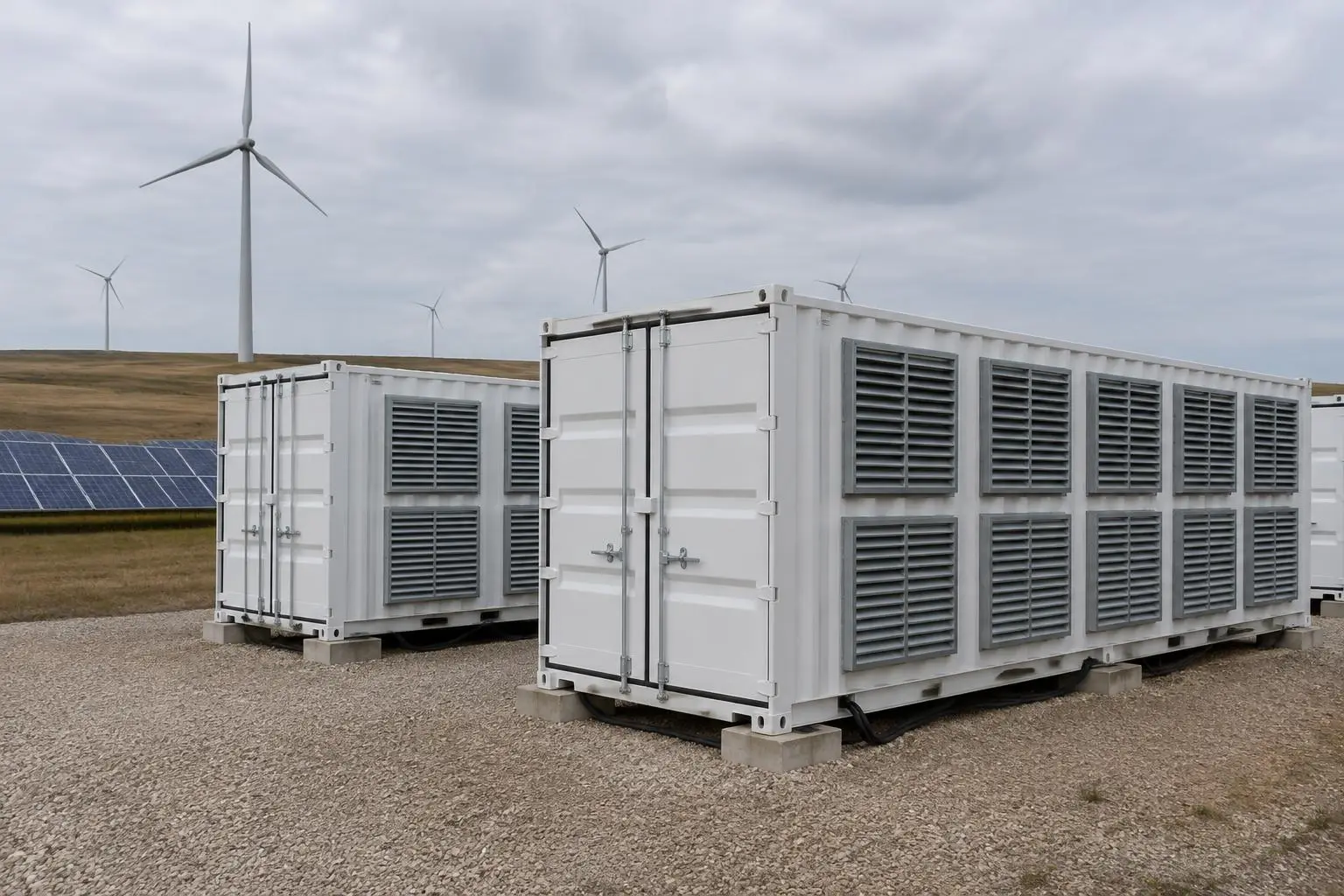
Industrial-grade infrastructure designed specifically for ASIC mining in North Dakota.
Power
Electrical distribution
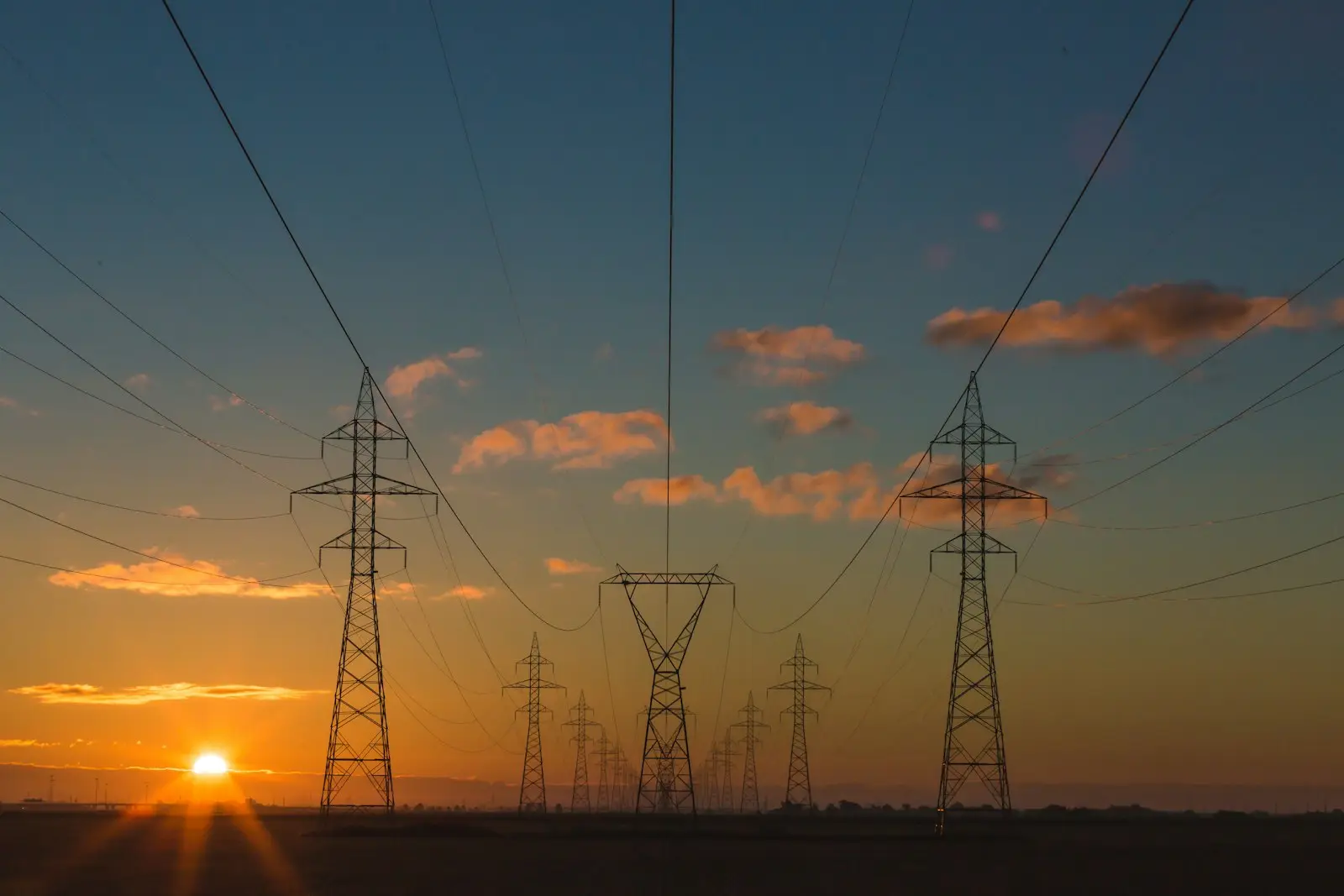
Power is delivered through industrial transformers and distribution equipment sized for mining loads, with protected circuits for every rack.
- Capacity: [Placeholder: MW]
- Industrial transformers and switchgear
- Circuit-level protection
Deployment
Containers and racking
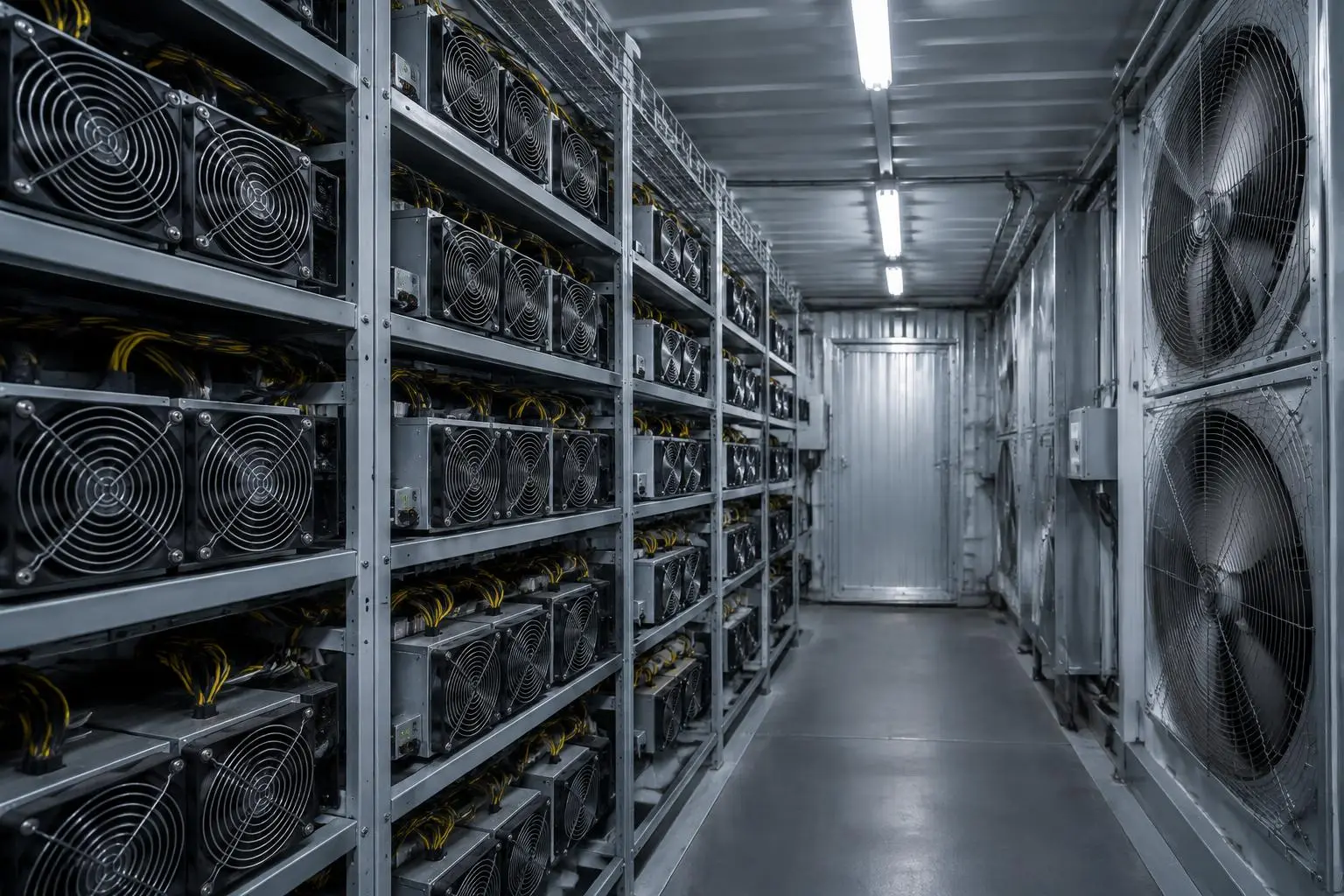
Miners are deployed in purpose-built mining containers and racks with structured power and data cabling for safe, serviceable installations.
Network
Networking and monitoring
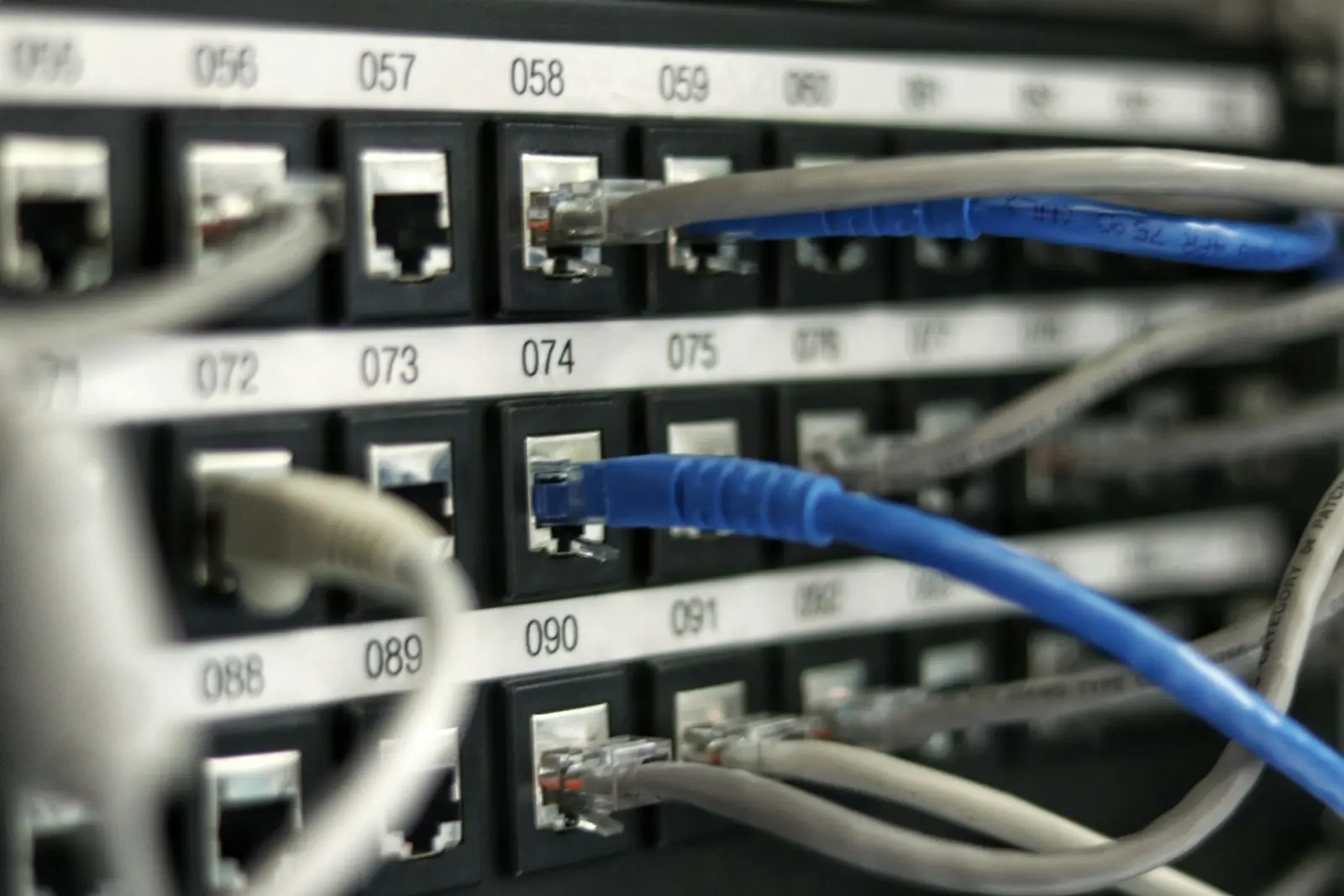
Redundant internet connectivity and segmented networks keep miners connected to pools, while monitoring systems track each unit's status.
Facility capabilities
Security
Controlled access, perimeter protection and camera surveillance.
On-site technicians
Staff for installation, maintenance and repairs.
Environmental monitoring
Temperature, humidity and airflow sensors.
Electrical Distribution: From Incoming Power to Each Miner
An ASIC mining power system has several distinct jobs: convert incoming voltage, distribute power, isolate equipment, and interrupt faults. In a typical installation, transformers change utility voltage to the level required by downstream equipment. Switchgear provides switching and protective functions for larger electrical feeds. Distribution panels and power distribution units, or PDUs, divide those feeds into connections suitable for individual miners. These components must be selected as a coordinated system rather than as interchangeable accessories.
Circuit protection helps keep a wiring fault or equipment failure from becoming a wider electrical hazard. Breakers and fuses must match conductor ratings, available fault current, and applicable installation requirements. Because miners can operate continuously, electrical design must account for continuous loading, not just a nameplate total. Miner voltage, connector type, power supply characteristics, and operating mode also matter. A qualified electrical professional should evaluate conductor sizing, grounding, protective-device coordination, and safe isolation procedures before equipment is energized.
Cooling Infrastructure Starts With the Miner Design
Almost all electricity consumed by a miner ultimately becomes heat that must leave the cooling system. Air-cooled equipment transfers that heat to moving air, making intake conditions, airflow resistance, and separation of hot exhaust from cool intake important. Filters can reduce particulate exposure, but dirty filters restrict flow. The air-cooled miner hosting guide explains this cooling category. Cooling capacity should be evaluated against actual electrical load and operating conditions, not fan count alone.
Hydro-cooled miners use a compatible liquid circuit to carry heat away from internal components; the hydro-cooled miner hosting guide covers that equipment category. Immersion systems instead place compatible hardware in dielectric fluid, as outlined in the immersion cooling hosting guide. Both approaches still need a way to reject heat from the fluid to the surrounding environment. Compatibility depends on manufacturer requirements, fluid specifications, flow, pressure, materials, and service procedures. These systems are not interchangeable upgrades for every ASIC.
Networking: Redundancy and Connection Quality
Teraminerhosting has redundant network connectivity. For mining equipment generally, the connection carries pool jobs, submitted shares, and management traffic rather than large customer workloads. Bandwidth alone therefore says little about mining connection quality: packet loss, unstable routing, and interruptions can affect useful participation even when headline connection speed looks adequate. Redundancy adds alternative connectivity, but its value depends on which failure points the design addresses. It does not establish an uptime guarantee or eliminate every possible interruption.
When reviewing a mining network, distinguish the external connection from internal switches, cabling, addressing, and miner configuration. Alternative upstream connectivity cannot resolve every local cable fault or an incorrect pool setting. Useful checks include connection history, rejected or stale shares, DNS behavior, and whether configured backup pools work as intended. Management access also deserves separate consideration: generally, miner interfaces should not be exposed directly to the public internet, and administrative access should be limited to authorized users.
Physical Security: Access Control and Equipment Accountability
Teraminerhosting uses controlled facility access and camera surveillance. These measures address different parts of physical security: access controls restrict entry, while cameras support observation and review of activity. Neither should be treated as a promise that theft, damage, or unauthorized activity is impossible. For owners assessing any hosting arrangement, the practical question is how physical access relates to custody of their equipment, especially when a miner arrives, moves between service positions, or leaves for repair or return.
A general equipment-accountability process links a miner’s serial number to its owner, receiving record, and assigned position. Documented movement and release authorization can help reduce confusion when visually similar machines are handled together. Owners should also review who may authorize equipment removal and what documentation is required for third-party collection. Camera retention, visitor procedures, insurance terms, and incident documentation are separate subjects to verify rather than assumptions that follow automatically from the presence of cameras or controlled entry.
On-Site Operations: Turning Symptoms Into a Diagnosis
Teraminerhosting has on-site technicians. Physical inspection can help distinguish faults that look similar in a remote dashboard. A missing miner, for example, could reflect loss of power, a network issue, a configuration problem, or a hardware fault. Remote readings alone may not reveal a damaged connector, obstructed intake, or disconnected cable. Technician presence is distinct from a defined repair scope, however; it should not be interpreted as a specific response-time commitment or authorization to perform every repair.
In general, troubleshooting should begin with identifying the unit and recording symptoms before changing settings or restarting equipment. Useful evidence includes operating logs, board status, temperatures, fan readings, and recent configuration changes. Work involving electrical exposure requires appropriate qualifications and safe isolation. Owners should establish which actions require approval, whether replacement parts need separate authorization, and how warranty restrictions affect service decisions. A clear service record makes recurring problems easier to investigate and separates observations from assumptions about the cause.
Environmental Monitoring: Measure Conditions Where They Matter
Environmental monitoring is most useful when readings describe conditions the equipment actually experiences. A room average can hide a hot intake or a pocket of recirculated exhaust. In air-cooled systems, intake temperature, humidity, and airflow-related readings can help explain changing miner temperatures. In liquid systems, supply and return temperatures, flow, pressure, and leak detection may be relevant. Sensor placement and calibration matter because an accurate reading from the wrong position can still give a misleading picture.
Trends often provide more diagnostic value than isolated readings. Rising component temperatures at similar power draw may suggest a changing cooling condition, while a simultaneous temperature increase across multiple units can point toward a shared cause. Alarm thresholds should reflect manufacturer limits, sensor accuracy, and the time needed to investigate safely. Humidity also needs context: condensation risk depends on surface temperature relative to the air’s dew point. Monitoring should connect an alert to a defined assessment process rather than encourage automatic conclusions.
Safety and Fire Protection: A System-Level Review
For mining installations generally, fire protection begins with electrical design, suitable materials, and maintenance—not just extinguishers. Loose connections, damaged insulation, overloaded conductors, and obstructed cooling can create hazardous conditions. Good housekeeping helps keep combustible materials away from equipment and preserves access to electrical panels and exit routes. Inspection methods should be appropriate to the equipment and performed by qualified personnel. Repeated breaker trips require investigation; resetting protection without identifying the cause can leave the underlying hazard unresolved.
Detection, notification, suppression, and emergency isolation should be evaluated together by qualified professionals under applicable codes and authority requirements. The appropriate approach depends on electrical equipment, building characteristics, and any cooling fluids present. A dielectric fluid’s electrical properties do not by themselves establish its fire behavior; safety data and system design still matter. Written emergency procedures should clarify evacuation, notification, and authorized shutdown responsibilities. These are general evaluation criteria, not a description of specific fire-protection equipment or procedures at Teraminerhosting.
FAQ
Common questions
Can I visit the facility?
Site visits can be arranged for customers by appointment.
What is the total capacity?
[Placeholder] Current available capacity is confirmed during the quotation process.
Why can wall power differ from a miner’s published power specification?
Published specifications usually describe a defined operating mode under stated test conditions. Actual input power can change with firmware settings, temperature, power supply efficiency, and unit variation. Measurement boundaries matter too: a miner reading may not include shared cooling or other infrastructure loads. Compare readings taken over the same interval and confirm what each measurement includes.
What is the difference between miner hashrate and pool-reported hashrate?
A miner typically reports its local hashing activity, while a pool estimates hashrate from shares received over a measurement window. Short-term differences are normal because share submission is variable. Persistent differences warrant checking rejected shares, connection interruptions, configuration, and hardware errors. Compare consistent time windows rather than treating a brief mismatch as proof of an infrastructure fault.
Does stable infrastructure guarantee mining revenue?
No. Mining revenue is not guaranteed, even when equipment operates consistently. Results depend on network difficulty, block rewards, transaction fees, pool terms, asset prices, and the miner’s effective hashrate. Profitability also depends on hosting charges and other expenses. Infrastructure supports equipment operation, but it cannot control market conditions or guarantee that revenue will exceed costs.
Ready to Host Your ASIC Miners?
Share your equipment details and our team will prepare a customised hosting quotation.